
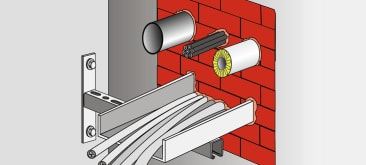
A COMPREHENSIVE GUIDE
Introduction
Passive fire protection is a critical component in the design and construction of buildings and infrastructure. Unlike active fire protection systems, which require activation to function (e.g., sprinklers and alarms), Passive systems are built into the structure to prevent the spread of fire and smoke, thereby protecting lives and property. As the complexity of modern buildings increases, so does the need for passive firestop solutions with additional attributes that enhance their effectiveness and adaptability.
Additional attributes in the context of passive fire protection refer to the supplementary features or characteristics that enhance the basic functionality of the systems. These attributes can include improved thermal resistance, environmental durability, water tightness, movement resistance etc. They are designed to address specific challenges and requirements that standard solutions may not fully meet.
Picture 1: HILTI specific pictograms for Additional attributes
Key Additional Attributes
There is a long list of available additional attributes. But all attributes do not apply to all firestop solutions.
1. Acoustic Insulation
Definition: The ability to prevent sound transfer from one room to another above a certain decibel level.
Importance: Important for maintaining privacy and comfort in hotels, residential buildings, and hospitals.
Test Setup: Transfer of sound through a standard wall assembly of 1.25 m x 1.50 m which consists of the combination of wall and firestop product in blank openings.
2. Air/Gas Tightness
Definition: The ability to resist the free flow of air or gas through the firestop system, maintaining thermal insulation and containing fire-extinguishing gases within the room where the fire started.
Importance: Essential for data centers, hospitals and other facilities where maintaining specific environmental conditions is crucial.
Test Setup: An airtight module with firestop products is installed in a pressure chamber and fixed to a wooden frame
3. Mold and Mildew Resistance
Definition: The ability to prevent mold or mildew formation, which can compromise the integrity of the firestop product.
Importance: Ensures long-term durability and effectiveness of the firestop system, particularly in humid environments.
4. Seismic/Movement Control
Definition: The capacity to accommodate or absorb small movements caused by earthquakes or other factors, maintaining fire-stopping properties even if pipes and cables move.
Importance: Critical for buildings in earthquake-prone areas, ensuring that the firestop system remains effective despite structural movements.
Test Setup: 1 penetrant through a fixed wall is subjected to load in all directions followed by fire tests.
5. Thermal Resistance:
Definition: Thermal resistance ensures that fire protection materials can withstand higher temperatures for longer periods, providing better protection in severe fire scenarios.
6. Water Resistance
Definition: The ability of a firestop product to withstand short-term exposure to water, such as from sprinkler systems or broken water pipes.
Importance: Ensures the integrity of the firestop system is maintained even in the presence of water, preventing water from compromising the fire barrier.
Test Setup: A concrete block with a centered, square opening sealed with the firestop product is tested with a Plexiglas tube filled with colored water, checked daily for leakage.
7. Electrical Resistance
Definition: The ability to resist the transfer of electric current through the firestop system, particularly important if there is a damaged cable within the insulation.
Importance: Prevents electrical hazards and ensures the safety of the building’s electrical systems.
The selection of passive fire protection solutions can take place at various stages of a project lifecycle (design, build and operate stages). It is very important for the safety of the building and the people in it that it starts at the design stage, and it is included in the fire strategy for the building. Some of the main benefits of selecting products with the right additional attributes are:
· Compliance with Regulations: Enhanced attributes help ensure that buildings meet stringent fire safety codes and standards, which vary globally but are universally rigorous.
· Design Flexibility: Attributes like aesthetic integration, re-penetration ability and ease of installation and maintenance provide greater flexibility in design, allowing for innovative architectural solutions without compromising safety.
· Long-term Performance: Attributes such as thermal resistance contribute to the long-term performance and reliability of fire protection systems, reducing maintenance costs and enhancing safety over the building’s lifespan.
· Sustainability Goals: Sustainable solutions align with the growing emphasis on green building practices, helping projects achieve certifications like LEED or GBC.
Main Considerations for selecting firestop solutions with Additional Attributes
1. Compatibility: Ensure that passive fire protection systems are compatible with other building materials and systems.
2. Cost: Evaluate the cost-benefit ratio of enhanced attributes, considering both initial investment and long-term savings.
3. Regulatory Compliance: Verify that the passive fire protection solutions meet all relevant local and international fire safety standards.
4. Performance Testing: Assess the performance of passive fire protection systems through rigorous testing to ensure they meet the required specifications.
5. Installation and Maintenance: Consider the ease of installation and the maintenance requirements of the passive fire protection systems.
Testing for additional attributes in passive fire protection solutions involves a series of standardized procedures to evaluate their performance under various conditions. These tests are conducted by accredited laboratories and include:
· Fire Resistance Testing: Measures the ability of passive fire protection materials to withstand fire exposure for a specified period.
· Environmental Testing: Assesses the durability of passive fire protection systems under conditions such as humidity, UV exposure, and chemical exposure.
· Mechanical Testing: Evaluates the structural integrity and mechanical properties of passive fire protection materials.
· Global codes and standards play a crucial role in defining the testing procedures and performance criteria for passive fire protection solutions. Some of the key standards include:
- NFPA 101: Life Safety Code, which provides guidelines for fire protection and safety in buildings.
- EN 13501-2: European standard for fire classification of construction products and building elements.
- ISO 834: International standard for fire-resistance tests on building elements.
- ASTM E119: Standard test methods for fire tests of building construction and materials.
Most Hilti passive fire protection solutions have been tested for different additional attributes. This information can be found on the Hilti website under the “FEATURES AND APPLICATIONS” of the product:
Conclusion
The integration of additional attributes into passive fire protection solutions is essential for enhancing the safety, durability, and functionality of modern buildings. Architects and engineers must carefully consider these attributes to ensure compliance with regulations, achieve design flexibility, and meet sustainability goals. Rigorous testing and adherence to global standards are critical to verifying the performance of passive fire protection systems and ensuring their effectiveness in protecting lives and property.
By understanding and leveraging the additional attributes of passive fire protection solutions, professionals in the construction industry can contribute to safer, more resilient, and sustainable built environments.
