
Importance of Third-Party Certificates for Passive Firestop Products
This article highlights the importance of third‑party certification for passive firestop products, explaining how independent testing, audits, and continuous verification help ensure compliance, performance, and reliability supporting engineers and specifiers in selecting safe, code‑compliant fire protection solutions.
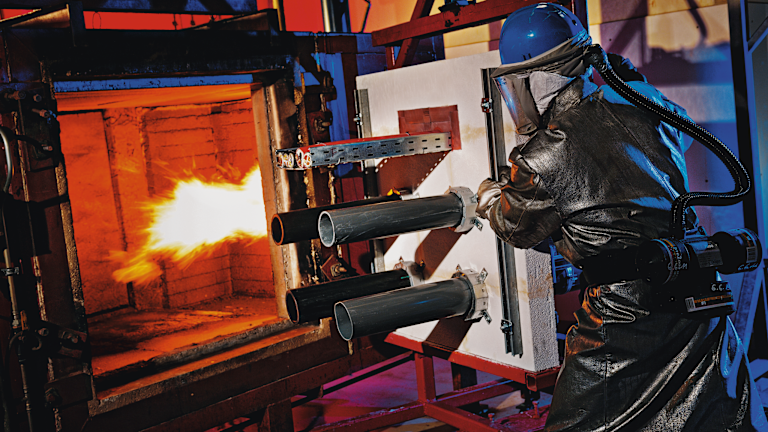
Certified performance. Proven protection. Trusted firestop solutions.
Life safety and asset protection are key requirements of building regulations across the globe.
In order to safeguard individuals and property, it is essential to implement an effective fire protection strategy. This encompasses both active and passive fire protection measures. Active fire protection involves methods such as fire detection and suppression using sprinklers, while passive fire protection helps to confine the fire and smoke within a specific area of the building. Both of these measures are crucial and should be in place to combat fires effectively. By creating sturdy fire compartments, the spread of smoke and fire can be restricted, allowing occupants to evacuate the building safely.
Compartmentation is achieved by implementing physical barriers, known as passive barriers, which are comprised of fire-resistant walls and floors that divide the building. Frequently, these walls and floors house multiple building services through openings, or penetrations, which can pose a significant risk to the entire building. Therefore, it is of utmost importance to ensure that all openings in fire-rated walls and floors are protected by seals with adequate fire resistance, known as firestop.
For over 30 years, Hilti has been providing internationally tested and certified firestop systems for a variety of applications, including mechanical, electrical, mixed penetrations, and construction joints. However, it is essential to ensure that the firestop solution chosen for your project is compliant with the necessary regulations.
What is third-party certification and why is it important?
Product certifications from third-party entities play a crucial role in the construction industry. ISO/IEC 17067 defines product certification as a process that ensures products meet specific requirements, including performance, safety, sustainability, and interoperability.
These certifications provide assurance to all stakeholders involved that products have undergone rigorous testing and evaluation by independent and impartial entities that are not the supplier or user. The process involves not only tests and reports but also continuous monitoring of materials and factories, audits, and evaluation of tests. It provides product marks and directories accessible to all interested parties.
Third-party certification is a comprehensive process that covers the entire chain, from raw material quality to documentation provided to builders, designers, inspectors, and project owners, ensuring a safe and reliable product.
How to ensure compliance and regulatory standards of the New Zealand codes?
Fire safety regulations and codes are essential to protecting buildings and saving lives. While third-party product certifications for firestop are not currently mandatory in New Zealand, recent building safety concerns have highlighted the need to include this requirement in national regulations.
As per the MBIE New Zealand Building Code, there is no specific reference or standards cited for fire stopping. Instead, designs use prescriptive compliance pathways such as C/AS1, C/AS2, or C/VM2. These pathways require compliance with Australian Standards AS1530.4 and AS 4072.1. Building consent authorities (BCAs) require compliance with the cited Australian standards. They also require evidence of suitability that can attest to the fire performance of products, but not all of them are created equal and some carry more risk than others.
For instance, a product technical statement issued by the manufacturer or supplier will not provide the same level of evidence as a test report by an accredited laboratory. The test report will not consider important information on the manufacturing process of the product. Only independent certifications will be able to provide the full picture and traceability to guarantee that the product supplied is identical to the one that is extensively and continuously tested.
Build confidence and trust with ease.
Hilti New Zealand provides a range of Firestop products that have been thoroughly tested according to Australian Standards. In partnership with UL Australasia, Hilti is working towards third-party product certification. These certifications serve as evidence of Hilti's commitment to delivering high-quality firestop solutions. They also ensure that Hilti's products are objectively assessed for their performance, reliability, and compliance. By relying on independent organizations to evaluate our products, Hilti fosters trust and transparency in the industry.
Hilti understands that customers have unique requirements when it comes to firestop applications. That's why Hilti offers technical expertise to help you get it right. Hilti also provides engineered solutions and support during all phases of specification work. If you require any support, contact our firestop experts on Engineering Center or through email.
If you're interested in learning more about this topic, we recommend watching the recording of our recent webinar (link here) which was hosted by Suman Narayan, Engineering Marketing Manager, and featured industry experts Ed Claridge, Principal Fire Engineer at Auckland Council, and Matthew Wright, Global Product Manager at UL Solutions. The recording provides valuable insights into the importance of third-party certifications.